
What a Long Sunday Lunch Taught Us About Piemonte
Updated: 10 hours ago

One of the first things you notice around a table in Piemonte is that nobody seems particularly interested in leaving it.
Lunch slips easily into the afternoon. Plates are cleared, but the conversation continues. Coffee arrives. Someone remembers another story. Another bottle is opened and, before you know it, several hours have passed without anyone appearing especially concerned about what they should be doing next. After two years of living here, this willingness to give a meal so much time is something we have come to appreciate enormously.
For me, there was also something unexpectedly familiar about it. I grew up in Australia in an Italian family, where Sunday lunch was a ritual. There was always pasta, usually antipasti and almost always far more food than we could possibly eat. For birthdays, Christmas, Easter and almost any other excuse to celebrate, everyone gathered at my Nonno and Nonna’s house. The table grew longer and there could easily be twenty of us sitting down together, and lunch would last for hours.
For years, I thought that was simply my family. But now, living in Piemonte has made me realise there was something much bigger behind it.


Why the table matters
There is an Italian word that helps explain what was happening around my family table: convivialità.
It is usually translated as “conviviality”, and it means the pleasure of eating together, sharing conversation and making people feel welcome. Food brings everyone to the table, but convivialità is what happens once they are there.
There is no single moment in history when Italians decided that this coming together over a Sunday lunch should last for hours. The tradition developed gradually, shaped by family life, Catholic feast days and the agricultural rhythms that once governed much of the country.
In rural communities, the working week revolved around the land. Sunday offered a pause: a day for Mass, rest and gathering with family. Food that demanded more time, labour or expense was often saved for Sundays, feast days and celebrations. Handmade pasta, slow-cooked dishes and precious cuts of meat were not everyday food. Preparing them marked the day as important. Yet the food was only part of it.
Sunday lunch brought generations back to the same place. Grandparents sat with grandchildren, relatives exchanged news and familiar stories were told again. Children learnt about their family simply by listening. They watched how a grandmother made a particular dish, heard stories about people they had never met and absorbed the small rituals that told them where they belonged.
The long table was not really about a particular piece of furniture. It became long because room kept being made. A cousin brought someone unexpected. A neighbour was persuaded to stay. Another chair appeared and the food somehow stretched far enough.
That is what makes the image of the long Italian table so enduring. It represents something larger than a meal. It is the understanding that there is always room for one more.

A meal that creates time
The structure of the Italian meal also helps explain why these gatherings last as long as they do.
A special lunch rarely arrives all at once. It unfolds slowly through antipasti, a primo, a secondo with its contorno, then perhaps cheese or fruit, dessert, coffee and a digestivo. Not every family serves every course, and ordinary weekday meals are generally much simpler, but the rhythm is familiar. Each plate creates a natural pause.
Even the word antipasto explains where it belongs. It is formed from anti, in the sense of “before”, and pasto, meaning “meal”: quite literally, what comes before the meal. Here in Piemonte, that beginning might include salami and local cheeses, roasted peppers, vitello tonnato or anchovies with bread. Often several dishes appear, one after another, while people are still settling in and the first stories of the day are beginning. By the time the pasta arrives, the gathering is already well underway.
These opening courses of food have a long history in Italy. Roman banquets began with the gustatio, while medieval and Renaissance feasts placed great importance on the sequence in which food was presented. Today’s antipasti cannot be traced neatly back to one ancient custom. Italian cooking has changed far too much for such a simple lineage, but the idea of allowing a meal to unfold gradually has endured.
Antipasti may be intended to awaken the appetite, but they also serve another purpose. They give people time to arrive properly, not only through the door but into the conversation. And our food here is never rushed because, in many ways, the time between the plates matters just as much as the plates themselves.

Food as a way of belonging
We often speak about Italian food as though it were one ancient national cuisine. In reality, it is a collection of deeply local traditions.
Italy became a unified country only in the nineteenth century. Before that, the peninsula was divided among kingdoms, duchies, republics and territories, each with its own dialects, ingredients and ways of cooking. People ate what could be grown, raised, gathered or preserved around them, so recipes were shaped by landscape, season and necessity.
Many of the dishes now considered part of Italy’s culinary heritage began as family or village food and were passed down orally rather than recorded in formal cookbooks. It was only after unification that writers such as Pellegrino Artusi began collecting domestic recipes from different parts of the country. His La scienza in cucina e l’arte di mangiar bene, first published in 1891, helped Italians discover more about how other Italians ate.
Even with the sharing of recipes it did not make Italian food uniform. The differences across our regions still remain today. A familiar dish can change from one region to the next, one village to the next and sometimes from one side of a family to the other. People will argue passionately about which version is correct.
Here in Piemonte, food speaks very clearly of place. Our rice from the plains, hazelnuts from our hills, local cheeses, truffles, wine and dishes made with ingredients that have been part of the landscape for generations. A recipe can tell you where someone grew up, what their family farmed and who taught them to cook. When Italians migrated abroad, as my family did, those traditions travelled with them. Recipes became a way of keeping hold of the places they had left behind. Even as dialects faded and new generations grew up in other countries, the family table remained recognisably Italian.
The food carried the memory, but the gathering carried the culture.
My parents and grandparents were not consciously giving us a lesson in Italian identity every Sunday. My Nonna was certainly not explaining convivialità while she cooked. We simply lived it. Recipes were passed down, but so was something less tangible. The understanding that we would come together, sit down and give one another our time.

Why that matters now
Perhaps we notice the value of these long lunches more keenly because so much of modern life appears to be moving in the opposite direction. We have never had more ways to contact one another. We can send a message across the world instantly, follow the lives of people we have not seen for years and remain permanently reachable. Yet being in contact is not always the same as feeling connected.
The first EU-wide loneliness survey, conducted in 2022, found that 13 per cent of respondents had felt lonely most or all of the time during the previous four weeks. More than a third had felt lonely at least some of the time. The research also found that both the number of meaningful relationships people had and the frequency of contact with others mattered.
Loneliness is not limited to older people. Recent figures from England show that younger adults actually report frequent loneliness more often than older age groups. Social isolation, however, remains a particular concern later in life, when bereavement, declining health, reduced mobility or the loss of everyday routines can quietly make someone’s world smaller. The World Health Organization estimates that around one in four older people is socially isolated.
Living alone is not the same as being lonely, of course, just as being surrounded by people does not guarantee that someone feels known or supported. But the figures suggest that regular, meaningful human contact cannot be taken for granted. And the internet is not simply the villain in this story. For someone who is housebound or separated from family by distance, a message or video call can be a lifeline. Technology allows relationships to continue in ways that would once have been impossible. The difference may lie in whether we are using it to participate in someone’s life or simply to watch it.
European Commission research found that heavy, passive use of social media was associated with greater loneliness, while active communication and instant messaging did not show the same relationship. Scrolling through someone’s photographs can make us feel as though we have kept in touch, when in reality we may know very little about what is happening in their life.
However a long lunch, in person, offers something different. You hear the full version of the story, including all the unnecessary details. Younger and older people remain part of the same conversation, even when their everyday lives have very little in common. There are repetitions and interruptions. Someone tells a story everyone has heard before. Someone else says the wrong thing. And usually the lunch is not always harmonious and is rarely as elegant as the photographs of long Italian tables might suggest.
But perhaps that is part of its value. Relationships are not built only through special occasions or perfectly arranged moments. They grow through the ordinary habit of continuing to spend time together.
The table as a form of care
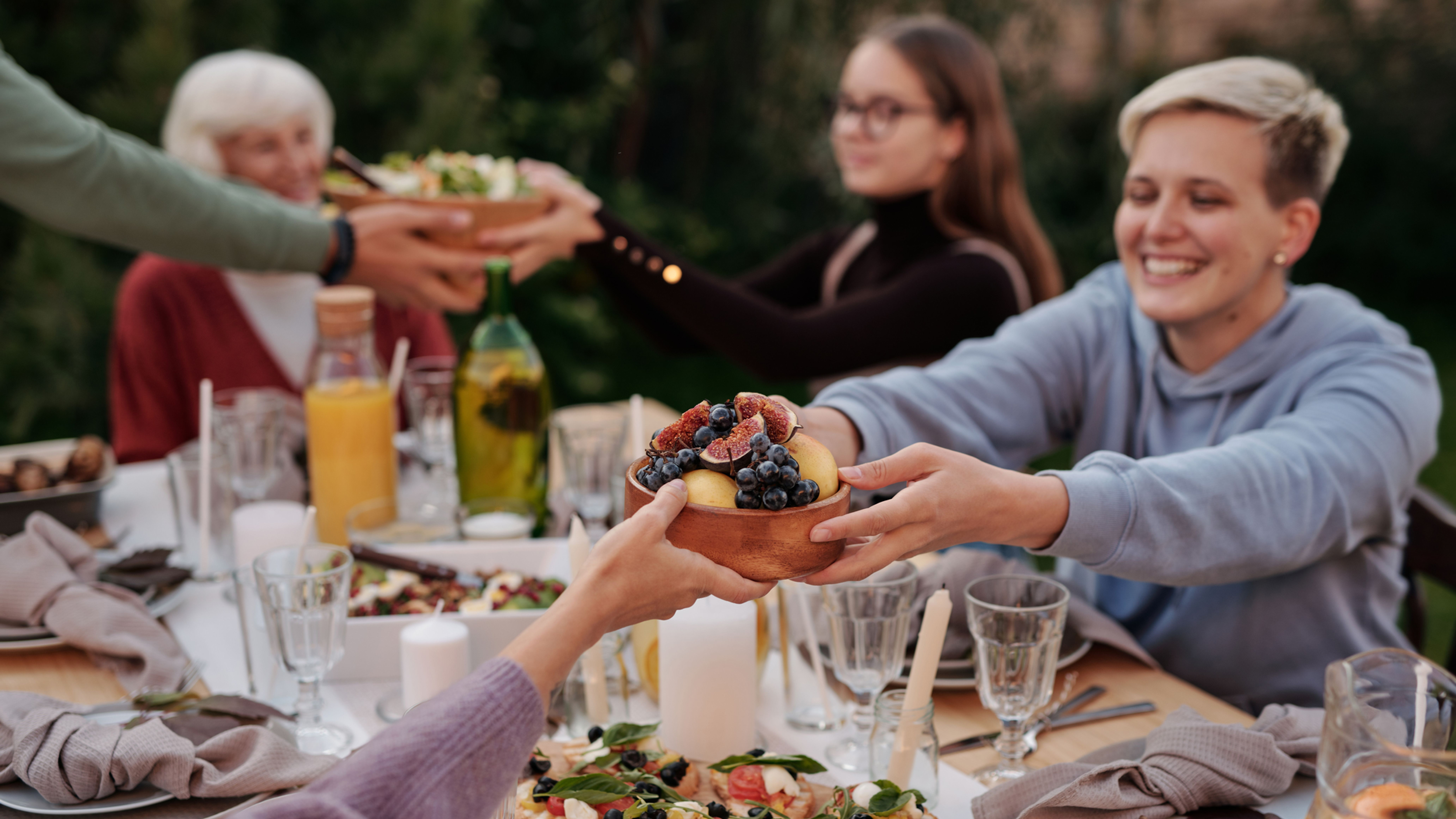
Research is beginning to look more closely at something families may have understood instinctively for generations. We are starting to understand that perhaps eating together can be one of the simplest ways of maintaining our relationships.
A 2026 study published in Scientific Reports analysed data from more than 150,000 people across 142 countries and territories. It found a strong association between sharing meals and wellbeing in almost every region studied. People who ate with others more frequently reported greater life satisfaction and more positive emotions. On days when people shared at least one meal, they also tended to report more happiness and less stress, sadness and pain.
The study cannot prove that lunch itself causes happiness. People who already have strong relationships may naturally share more meals. Even so, the scale of the association is striking. The researchers found that the frequency of shared meals explained as much variation in wellbeing as some familiar economic measures, including income and unemployment.
An earlier Oxford study found a similar pattern. It discovered that people who ate socially more often reported feeling happier, more satisfied with life and more connected to their communities. Italian culture never needed a scientific study to justify Sunday lunch. But the research helps explain why these ordinary rituals may be more beneficial to our health and wellbeing than we realise.
A regular lunch creates an occasion for connection before anyone has to ask for one. An older relative does not need to wait to be remembered for a birthday. Children grow up hearing the stories and voices of several generations. Cousins who might otherwise drift apart continue to know one another. And when somebody is missing, their absence is noticed.
This is also why UNESCO’s decision in 2025 to recognise Italian cooking as part of the Intangible Cultural Heritage of Humanity feels so significant. The recognition was not awarded to a single famous dish or a definitive collection of recipes. It described Italian cooking as a living cultural practice through which knowledge is passed on, local ingredients connect people to place and relationships between generations are strengthened. In other words, the heritage lies not only in what Italians cook, but in what happens when people sit down to eat it together.
Italy is certainly not immune to loneliness, smaller families or younger generations moving away. Nor does every Italian family still gather around a crowded table each Sunday. But the culture continues to hold on to the idea that eating together deserves time.
That may be the part worth protecting, and perhaps the part other cultures could learn from. Not the number of courses or the expectation that every Sunday must disappear into a six-hour lunch, but the decision to make connection a regular part of life rather than something left to chance.
And where does wine fit?
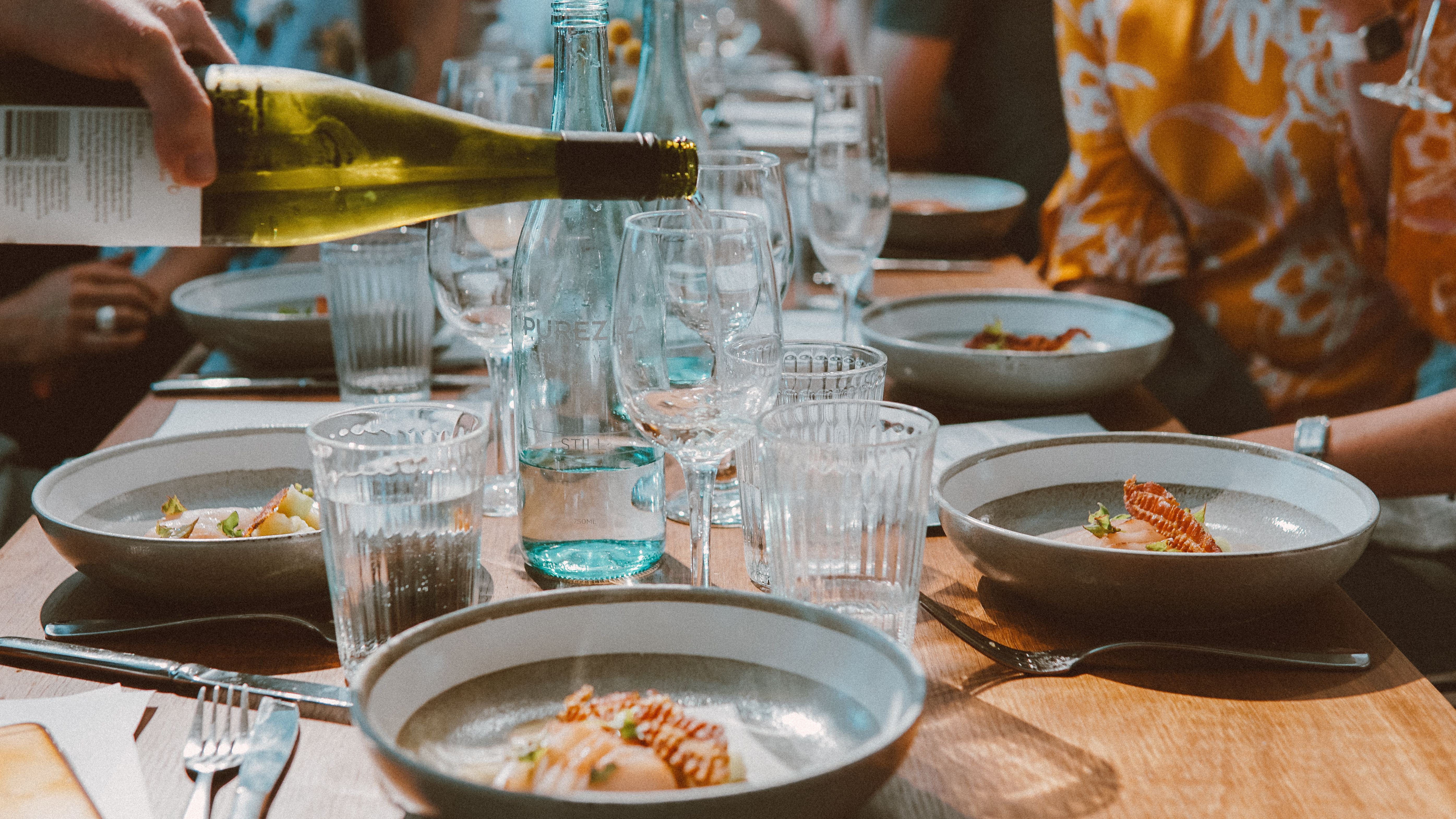
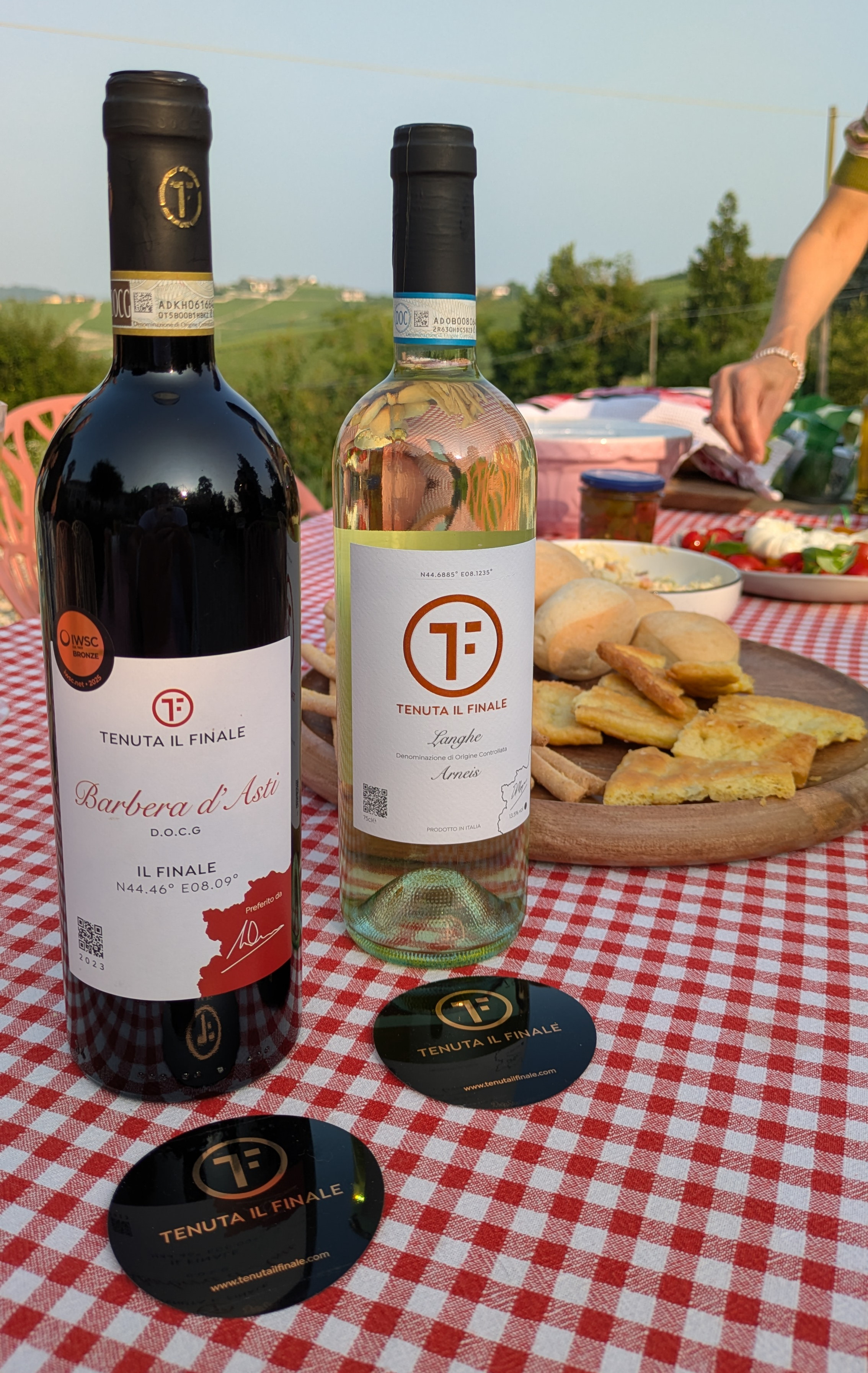
Living at a vineyard, perhaps we should tell you that wine is the most important thing on the table. It isn’t. People are.
Wine has a quieter role. A bottle is opened and glasses are poured. Someone might talk about where it came from, who made it or what the season was like that year. Then the conversation moves on. The wine remains there, accompanying rather than commanding the occasion. Increasingly, this is one of the things we love most about wine in Piemonte. It belongs within life.
Here, wine has long been connected to food, agriculture and the seasons. Wine carries the story of a vineyard, a village, a grape and a particular year. It carries the work of the people who tended the vines and brought the harvest into the cellar. But it does not need to be surrounded by ceremony to matter. Sometimes it is simply the bottle everyone shares over lunch.
And perhaps that is enough.


What we are learning in Piemonte
We have come to understand that the meal is not really taking time away from the day. It is what the time is for.
There is generosity in giving people an afternoon without constantly thinking about what comes next. We eat, of course, but mostly we listen, laugh, remember, disagree and get to know one another a little better. And for me, these lunches have also brought me back to something I did not realise I had missed.
Sometimes, sitting around a long table here in Piemonte, I hear that familiar noise again. Conversations overlap. Someone is telling a story at one end of the table while another person calls from the kitchen. Glasses are being filled and nobody is showing the slightest interest in going home. Suddenly I am back at my Nonno and Nonna’s house in Australia. Twenty of us around the table. My dad telling stories. My Nonna’s pasta.
For years, I thought the great gift of those days was the incredible food and the memories we made around it. Now I understand that the ritual itself was the gift. My parents and grandparents were showing us, without ever having to explain it, that people need more than invitations to birthdays and holidays. We need ordinary rituals that bring us back to one another. We need somewhere we know we belong and a reason to keep turning up.
Most of all, they were teaching us that one of the simplest ways we show people they matter is by giving them our time.
Sources
European Commission Joint Research Centre. The EU Loneliness Survey. Publications Office of the European Union. JRC133351. European Commission Joint Research Centre — The EU Loneliness Survey
World Health Organization. From loneliness to social connection: Charting a path to healthier societies — Report of the WHO Commission on Social Connection. World Health Organization. WHO Commission on Social Connection — Report
Department for Culture, Media and Sport. Community Life Survey 2024/25: Loneliness and support networks. UK Government. Community Life Survey 2024/25 — Loneliness and support networks
University of Oxford. (2017). Social eating connects communities. University of Oxford, 16 March 2017. University of Oxford — Social eating connects communities
De Neve, J.-E., Dugan, A., Kaats, M., & Prati, A. (2026). “Sharing meals is associated with greater wellbeing.” Scientific Reports, 16. Scientific Reports — Sharing meals is associated with greater wellbeing
Capatti, A. “Scoperta e invenzione della cucina regionale.” In L’Italia e le sue Regioni. Treccani. Treccani — Scoperta e invenzione della cucina regionale
Treccani. Antipasto. Vocabolario della lingua italiana. Treccani — Antipasto
UNESCO. (2025). Italian cooking, between sustainability and biocultural diversity. Representative List of the Intangible Cultural Heritage of Humanity. UNESCO — Italian cooking, between sustainability and biocultural diversity


